

Now that Japan’s ruling coalition has secured a majority in the lower house, Prime Minister Sanae Takaichi does not need to “immediately resign”. However, attention remains focused on her recent erroneous remarks and actions.
During a TV program late last month, Takaichi had asserted that in a so-called serious situation in the Taiwan Strait, Japan would collaborate with the United States to “evacuate nationals” from the Taiwan Island. She argued that if US forces were attacked and Japan failed to respond, the Japan-US alliance would collapse.
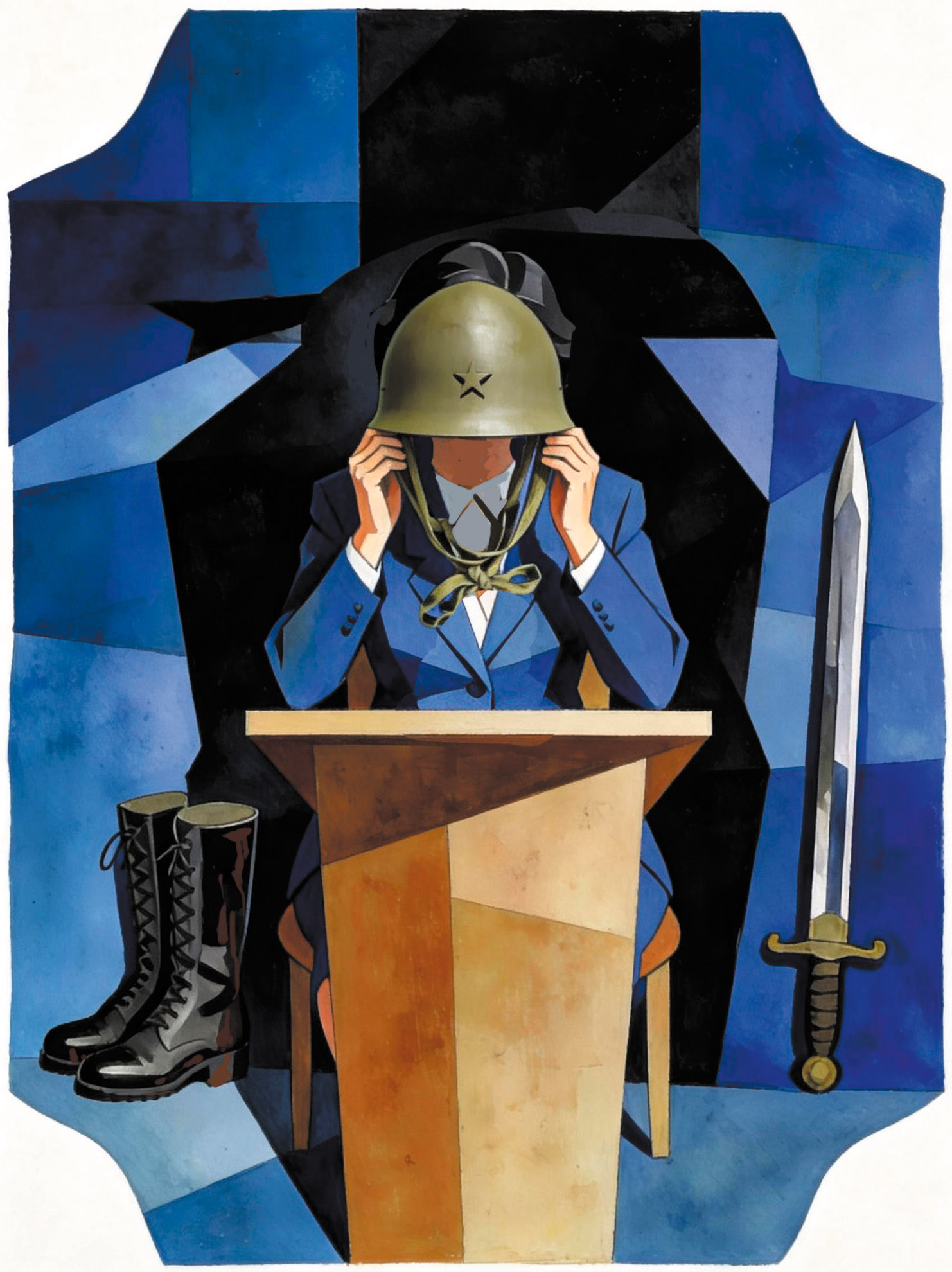
These remarks are a deliberate strategy that signals the revival of militarist tactics by right-wing forces. Under the guise of “protecting overseas nationals”, they want to break through postwar constraints and push Japan to intervene militarily in the Taiwan Strait. Takaichi has become the first sitting prime minister of Japan to explicitly advocate for dispatching troops in such a scenario.
READ MORE: Beijing calls for retraction of Japan PM's Taiwan remarks
It is an unprecedented move and deeply disturbing — all forces of peace in the world should be vigilant of the political motives behind it. History offers enough warnings in this regard. Since the First Sino-Japanese War (1894-95), the “humanitarian” narrative has been consistently used as a fig leaf for Imperial Japan to invade other nations and “justify” its colonial expansion.
In 1894, the Qing (1644-1911) government dispatched troops at the request of the Korean government to quell an uprising. Japan, on the other hand, unilaterally sent its forces claiming the need to protect its diplomatic mission and nationals. After the uprising ended, Japan refused to withdraw troops, provoking naval and ground battles against Qing forces and ultimately triggering the First Sino-Japanese War.
This became a recurring pattern for Japan: first, forcible intervention in another nation’s affairs under the guise of protective rhetoric; then, provoking conflicts and escalating the war; ultimately, grabbing land and seizing assets.
Japan has repeatedly used this strategy for expansion. In 1900, under the pretext of protecting Japanese nationals, diplomatic missions and concessions in China, it joined the Eight-Nation Alliance, dispatching tens of thousands of troops to occupy strategic locations in Beijing and Tianjin to extract extensive colonial privileges.
The same trick was repeated in 1928 when Imperial Japan attacked and massacred Chinese troops in Jinan in Shandong province, claiming that it was safeguarding its interests. Later that year, it cited the “chaos” following the assassination of Zhang Zuolin, a warlord in Northeast China, as a threat to Japanese nationals and reinforced troops along a railway line, laying the groundwork for invading Northeast China.
By the 1930s, this tactic had become a political reflex for Japan. In 1931, it fabricated incidents of attacks on Japanese nationals in Northeast China and launched the September 18 Incident. The next year, citing “threats” from anti-Japanese movements in Shanghai, it invaded the city and later secured the privilege to station troops there through a ceasefire agreement.
Japan also used the same pretext to dispatch troops and occupy Southeast Asian countries such as Vietnam, Thailand, and Malaysia, inflicting untold suffering on the local people.
What made these pretexts effective in their time was not their credibility but the “deceptive” machinery behind them. Tokyo consistently manipulated public opinion, domestically and internationally, packaging blatant acts of aggression as “legitimate actions to protect its nationals”.
Takaichi’s statement about “evacuating” Japanese and US nationals from China’s Taiwan island precisely mirrors the tactic that Imperial Japan had perfected. Her remarks are the product of right-wing forces’ efforts to promote “military normalization”, interfere in the Taiwan Strait, and pursue military hegemony in East Asia.
The underlying objective of her statement is to drag Washington into a so-called US-Japan joint intervention through moral coercion.
ALSO READ: Takaichi's election 'victory' calls for vigilance
Takaichi’s attempt to tie Washington to a potential military intervention in the Taiwan Strait disregards US core calculations on the Taiwan question: an unequivocal reluctance to risk direct confrontation with China merely to advance Japan’s ambitions and allow Tokyo to reap the benefits.
Even within Japan, rational voices have begun criticizing Takaichi’s erroneous rhetoric for pushing the country toward the dangerous brink of war.
In history, every war of aggression launched by Imperial Japan under the pretext of “protecting overseas nationals” over the past century has ended in failure. Legally, the Cairo Declaration, the Potsdam Proclamation, and the Japanese Instrument of Surrender have affirmed that Taiwan is an inalienable part of China and the Taiwan question is China’s internal affair. As a defeated nation in World War II, Japan has no right to meddle in the Strait. Those outdated tactics, no matter how they are disguised, are militarily ambitious and doomed to fail.
The author is the secretary and a researcher at the Center for Arms Control and Nonproliferation Studies, Institute of American Studies, Chinese Academy of Social Sciences.
The views do not necessarily reflect those of China Daily.
