

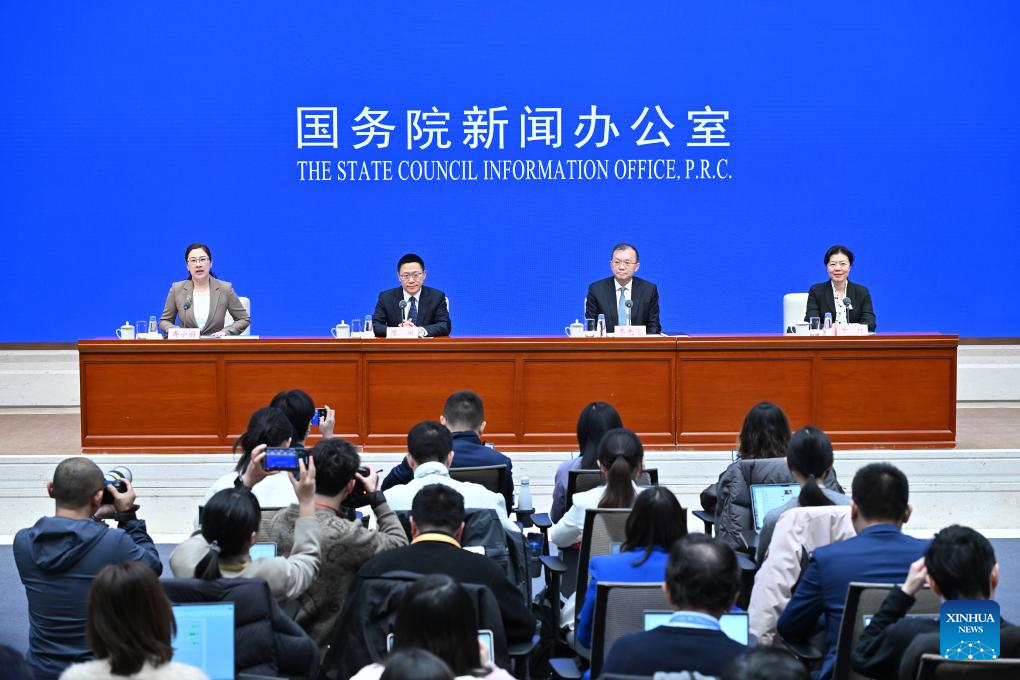
BEIJING - China will continue to implement a more proactive fiscal policy in 2026 that can be summarized as "expanding total volume, optimizing structure, enhancing efficiency, and strengthening momentum", Vice-Minister of Finance Liao Min said Tuesday.
Speaking at a press conference held by the State Council Information Office, Liao emphasized that China's fiscal deficit, total debt, and overall expenditure for 2026 will be maintained at necessary levels, so as to ensure that the intensity of total fiscal spending only increases and guarantee for key sectors remains consistently strong.
Liao emphasized that further expanding fiscal expenditure on top of the proactive 2025 levels underscores the government's strong policy commitment, while ensuring medium- to long-term fiscal sustainability.
The vice-minister said China will vigorously reduce inefficient and ineffective expenditures and redirect more fiscal resources toward boosting consumption, investing in human capital, and strengthening livelihood protection, while increasing household income through multiple channels.
ALSO READ: Fiscal policy for 2026 to be more proactive
In 2026, the government will continue to allocate ultra-long special treasury bonds to support major national strategies and building security capacity in key areas as well as large-scale equipment upgrades and consumer goods trade-in programs.
Liao said that in 2026, the Ministry of Finance will provide robust and concrete support to keep employment, businesses, markets and expectations stable, ensuring a good start to the 15th Five-Year Plan.
In 2025, China significantly intensified countercyclical adjustments, with the deficit-to-GDP ratio set at around 4 percent, an increase of one percentage point over 2024.
Despite the scale-up, Liao noted that China's government debt-to-GDP ratio remains relatively low, significantly below the average level of G20 countries.
