

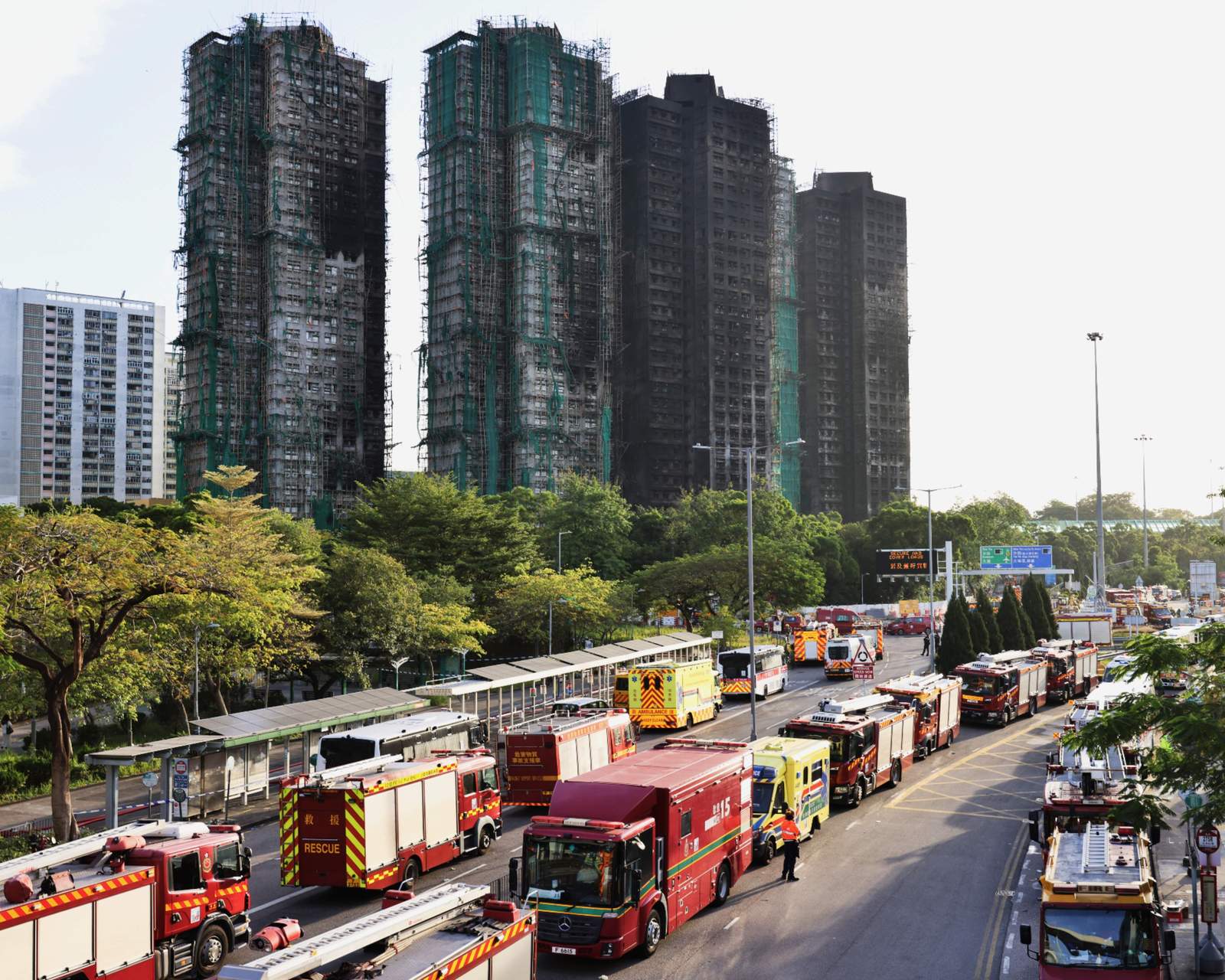
There are mixed opinions about how the Tai Po Wang Fuk Court blaze will affect Hong Kong’s residential property market, but one thing is certain: The safety and rehabilitation status of buildings will become increasingly important considerations when determining the value and pricing of residential properties in Hong Kong.
Firsthand residential homes usually enjoy a price premium compared to secondhand homes because the former are newly built, and the Tai Po blaze may accelerate this price premium.
“In the long-run, the premium on firsthand homes will be even higher compared to buildings that are 20 or more years old and which may desperately need large-scale whole-block renovation,” said Derek Chan, head of research at Hong Kong-based real estate intermediary firm Ricacorp Properties.
Property investors and homebuyers will lower the bidding price for older properties by pricing in the expected maintenance costs involved in whole-block renovation projects in the future. Therefore, home sellers may have to lower their asking price to facilitate a transaction, thus widening the price premium gap between firsthand and secondhand homes, Chan said.
He added that when private developers roll out new residential projects, prices of firsthand properties will gradually rise, and the price premium may gradually rise too.
On Nov 26, a large fire broke out at Wang Fuk Court in Tai Po, spreading to seven of the eight residential towers in the complex — the deadliest fire in Hong Kong since 1948, killing 161 people and injuring 79.
“As the building safety standards and the renovation (status) of buildings will become major considerations in property transactions, the Tai Po blaze is going to reshape Hong Kong’s property market structurally by shifting the focus of all relevant stakeholders in the industry value chain,” Chan told China Daily.
ALSO READ: Tai Po fire: What insurance compensation can be expected?
Insurance companies, when underwriting insurance policies and determining the insurance fees in the future, will take a building’s safety standards and renovation status into consideration, said Chan. Banks will base the tenor and loan-to-value ratio of their mortgage loans on these two factors. Home sellers and buyers will respond by adjusting their asking and bidding prices respectively.
Other economists and real estate analysts said they do not expect the price premium on firsthand flats to widen over secondhand units. Relatively new secondhand properties (those built within the preceding 10 years) with good estate management should not be affected by the blaze, they said.
“The Tai Po fire was a one-off disaster that should not affect the whole Hong Kong residential market. Property pricing and valuation depend on the building’s age and the level of estate management. Buildings that are 20 to 30 years old with poor estate management will be more likely to be affected by the fire,” said Billy Mak, associate professor at Hong Kong Baptist University’s Department of Accountancy, Economics and Finance.
The professor cited Taikoo Shing as an example, an estate that is over 30 years old. Thanks to good estate management and proper maintenance, residential flats at Taikoo Shing are still actively transacted on the local secondary home market.
Chester Leung, senior director of Valuation and Advisory Services at CBRE Hong Kong, said he believes the Tai Po fire will not have a long-term impact on the Hong Kong residential property market, as it is still determined by fundamental factors such as the supply of flats available and the sales strategies of developers.
Leung added: “As banks already are conservative in approving mortgage loans related to old buildings, I do not see the Tai Po fire will exert impacts on the valuation of secondhand properties. Therefore, secondhand flats may not exhibit a price discount compared to firsthand homes.”
READ MORE: Hong Kong fire: Call to expedite resettlement plans
According to Development Bureau figures, from 2014 to 2023 the number of private buildings aged 50 years or older increased by 510 each year — far higher than the 160 buildings being redeveloped each year. The number of buildings aged 50 years or older was 10,200 in 2023, and is projected to reach to 16,900 in 2033 and 24,300 in 2043 — an annual rate of 740 buildings on average.
