

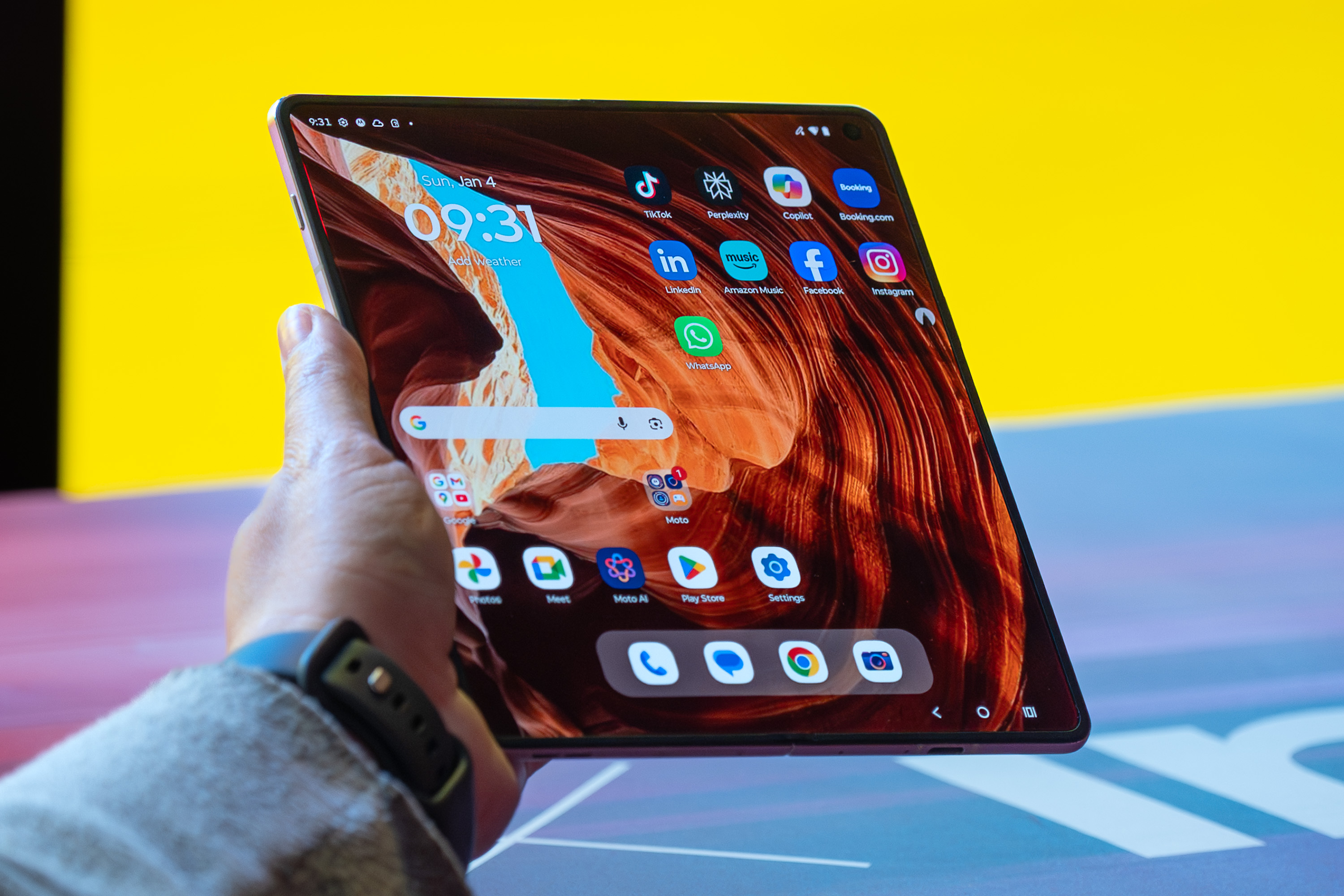
Lenovo Group Ltd‘s Motorola unveiled its first folding phone that opens like a book or passport, a departure from the string of clamshell-style foldables that the brand has released over the last several years.
The device is called the Razr Fold — though this iteration doesn't bear any resemblance to Motorola’s once-iconic handset. Motorola offered few details about its technical specifications and said it plans to share more in the coming months. It also did not reveal a price or expected release date.
Lenovo showed off the device during a flashy keynote at the Consumer Electronics Show on Tuesday alongside a range of new laptops, desktop PCs, concept devices and smart glasses. Like many of its competitors, the company has arrived at the annual consumer technology conference ready to demonstrate it can keep up and adapt in the age of artificial intelligence. But it’s one of relatively few brands this week unveiling smartphones — not typically a heavy area of focus at this industry event.
With this announcement, Motorola is making a late entrance into a relatively established segment: Competitors like Samsung Electronics Co are already launching trifold phones with screens that fold in two places.
For now, Motorola has confirmed that the Razr Fold features a 6.6-inch (16.8 cm) outer display that unfurls to reveal an 8.1-inch (20.6 cm) inner screen, dimensions that are slightly larger than most competing devices in the US. The Android-based phone will include three rear cameras that are each 50 megapixels, plus a 32-megapixel selfie camera, and a 20-megapixel camera on the inner screen that’s primarily intended for video calls.
In addition, Motorola will offer a note-taking stylus accessory for the new foldable — a departure from the Galaxy Z Fold 7 and Pixel 10 Pro Fold.
The Razr Fold will also include Qira, a new artificial intelligence platform that will be offered across Lenovo and Motorola devices, promising a more consistent user experience. The company is combining its past AI efforts across both brands into one unified assistant.
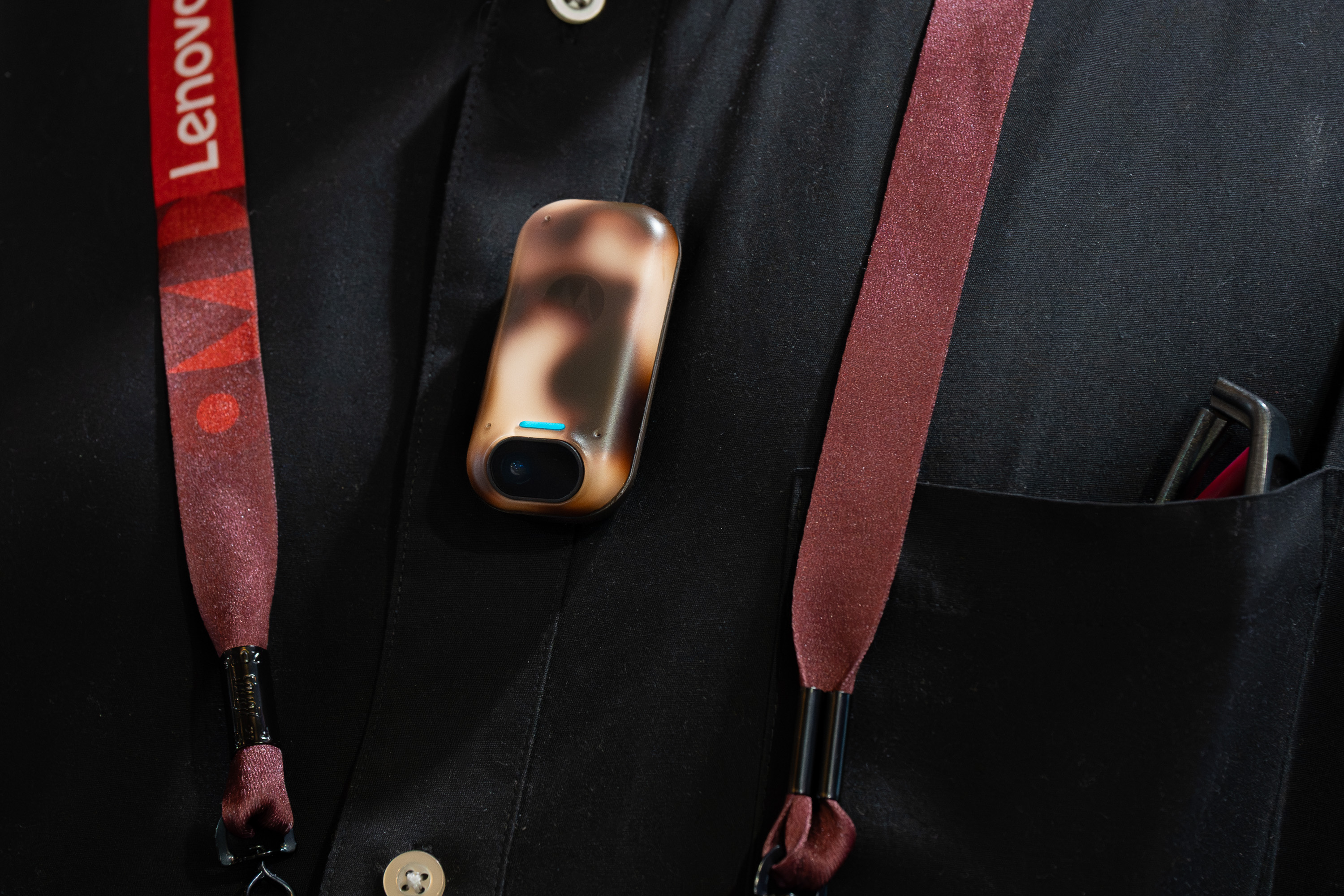
At CES, Motorola also showed off a concept AI wearable gadget with a built-in camera known as Project Maxwell. The company is still exploring this burgeoning category, but uses for the early hardware sample include live translation and using the camera to ask questions about someone’s surroundings or to automatically take snapshots throughout the day for a digital journal of sorts. It, too, would run the new Qira platform. Project Maxwell came out of Motorola’s 312 Labs team, which focuses on future innovation.
Users can activate the device by pressing a finger against its surface. “When prompted, this helpful assistant continuously collects full scenario data — seeing what you see, hearing what you hear, and listening to what you say — and provides real-time insights and personalized recommendations,” Motorola said in a statement. Learnings from Project Maxwell will inform the company’s future, consumer-facing AI initiatives, it added.
Motorola didn’t provide details on the device’s potential battery life, as a company representative acknowledged that it’s one of the biggest technical hurdles for this hardware type. The company showed off multiple different exterior styles including a tortoise shell finish, a pearlescent look and another covered in blue fabric.
A plethora of wearable AI-powered gadgets are likely to arrive in 2026 and beyond as tech companies try to land on a formula that sparks broad consumer interest. OpenAI is in the midst of developing its hotly anticipated first hardware device in partnership with former Apple Inc design boss Jony Ive.
Motorola’s other CES announcements include a sleek Android smartphone with high-end specifications — which won't be released in the US — plus new location trackers, a revamped smartwatch and a portable Bluetooth speaker with sound tuned by Bose Corp. A limited edition FIFA World Cup 2026 edition of the Razr flip-style foldable will be released in February with exclusive ring tones and wallpapers. That product will exclusively be sold direct from Motorola and Verizon Communications Inc followed by wider retail availability in March.
