

Boosting domestic demand, proactive fiscal policy among key tenets outlined at work conference
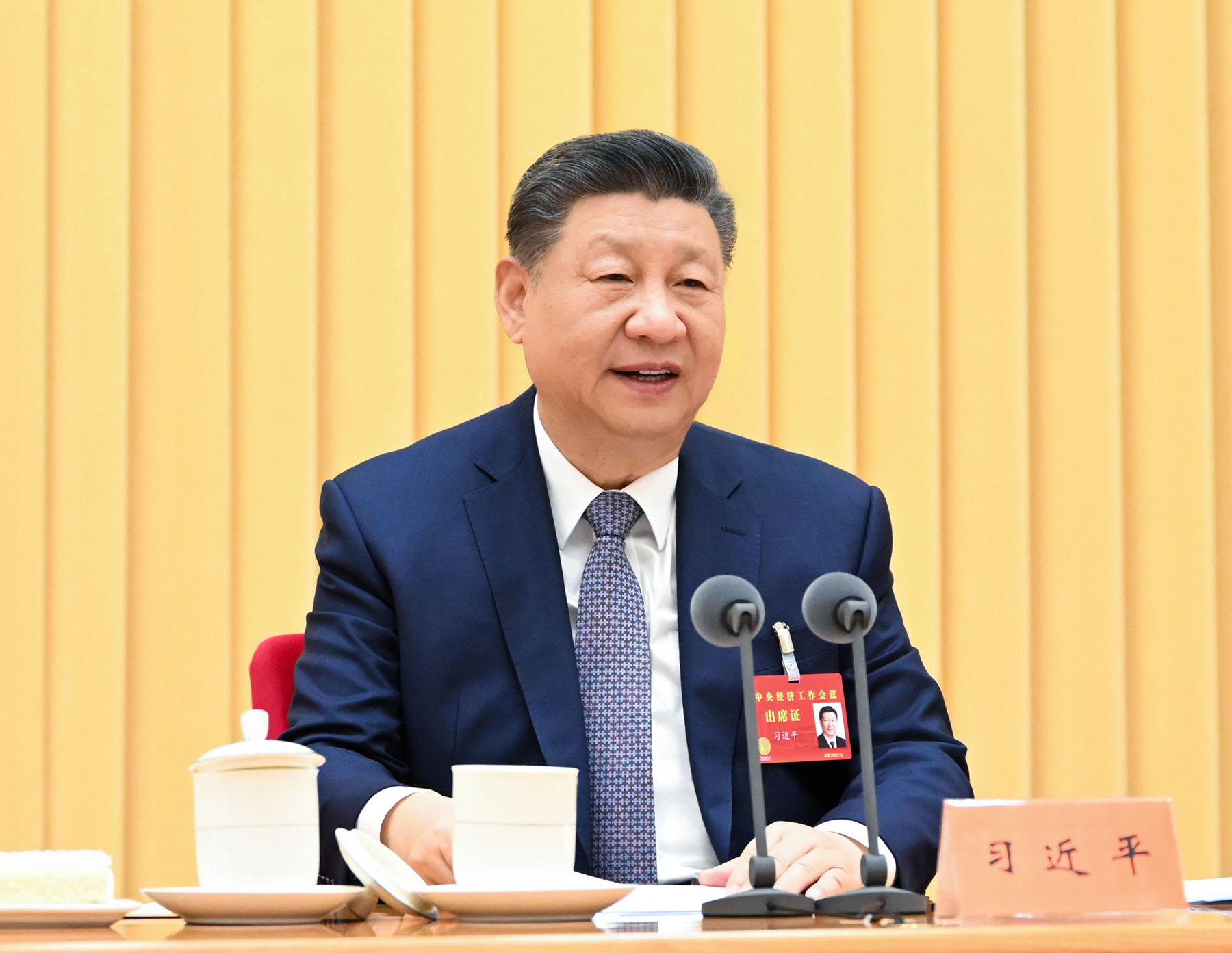
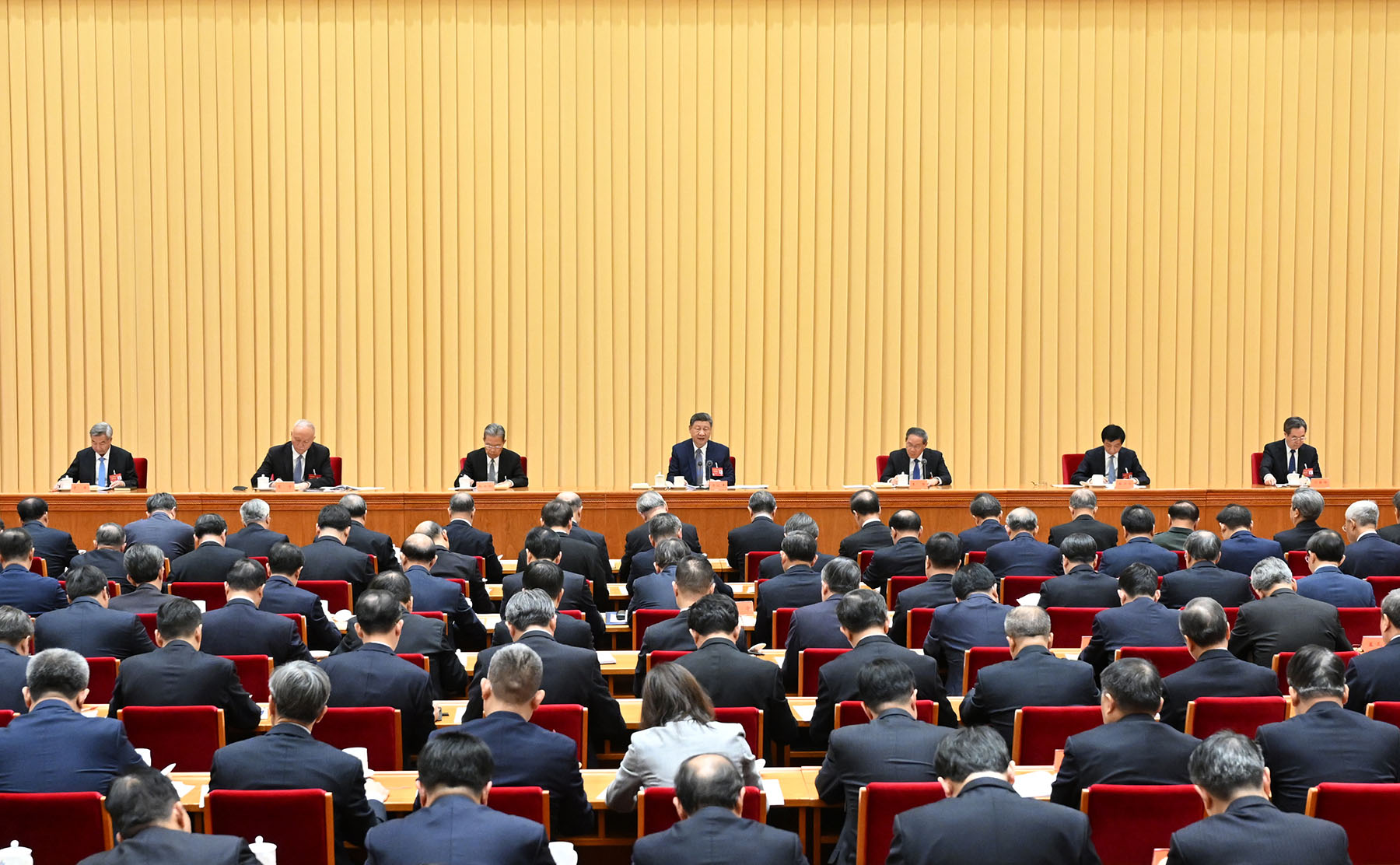
China has pledged to build a robust domestic market to bolster the economy and counter external challenges, as it set out priorities for next year’s economic policy at the two-day annual Central Economic Work Conference, which concluded on Dec 11.
Xi Jinping, general secretary of the Communist Party of China Central Committee, delivered a speech at the conference.
In his speech, Xi, who is also Chinese president and chairman of the Central Military Commission, reviewed economic progress in 2025, analyzed the current economic situation, and laid out priorities for related work in the coming year.
By setting a clear agenda for 2026, the Central Economic Work Conference aims to navigate China through its economic challenges while seizing opportunities for high-quality growth.
While highlighting the need to continue expanding domestic demand, the conference urged efforts to advance the construction of a unified national market in greater depth and develop new quality productive forces tailored to local conditions to promote “effective qualitative improvement” and “reasonable quantitative growth” in the country’s economy.
A statement released after the meeting said that, to achieve better performance in economic work under the new circumstances, “we must strengthen our capabilities to cope with external challenges”, highlighting the importance of enhancing policy support as well as promoting reform and innovation.
Acknowledging that numerous long-standing issues and new challenges remain in economic development, the conference noted the growing impact of changes in the external environment on the country’s economic growth, the prominent contradiction of strong supply and weak demand in the domestic market, and risks and hidden dangers in key areas.
Most of the problems are coupled with development and transformation, and can be resolved through efforts, the statement said, adding that the supporting conditions and fundamental trend of long-term, positive economic growth in China remain unchanged.
Setting the tone for next year’s economic work, the conference emphasized the need to adhere to the overarching principle of “seeking progress while maintaining stability” and better coordinate domestic economic work and endeavors in the international economic and trade arena, as well as development and security.
It is important to align incremental policies fully with existing ones and to strengthen countercyclical and cross-cyclical adjustments to enhance the efficiency of macroeconomic governance effectively, the statement said.
The nation will continue exerting a more proactive fiscal policy and a moderately accommodative monetary policy next year, the statement said, adding that when formulating monetary policy, promoting stable economic growth and allowing a reasonable rise in prices are both important aspects that should be taken into consideration.
It is essential to flexibly and efficiently use various policy tools such as reserve requirement ratio cuts and interest rate cuts to maintain ample liquidity, and guide financial institutions to strengthen support for expanding domestic demand, technological innovation, and small and medium-sized enterprises, the statement said.
China will maintain the basic stability of the renminbi’s exchange rate at a reasonable and balanced level, it added.
As a priority for next year’s economic agenda, China plans to boost the domestic market by implementing a consumption enhancement campaign and urban-rural income growth plans, optimizing consumption policies, removing unreasonable restrictions hindering consumption, and stimulating services consumption.
Investment will be stabilized with measures such as an increase in central budget investment, effective use of local government bonds, and high-quality urban renewal.
The conference underlined the need to promote innovation-driven growth to enhance fresh growth drivers for the economy. Major international science and technology innovation centers will be established in Beijing, Shanghai, and the Guangdong-Hong Kong-Macao Greater Bay Area.
The country will also work to improve systems of intellectual property protection in emerging areas, roll out an action plan to promote the service sector, and launch a new round of a campaign to bolster the high-quality development of the industrial chain in key sectors, the statement said.
The conference outlined plans for comprehensive reforms to enhance market vitality, including efforts to advance the construction of a unified national market, address rat-race competition, reform State-owned enterprises, and promote development of the private economy. Efforts to tackle issues such as overdue payments to enterprises and deepen the comprehensive reform of investment and financing in the capital market were also highlighted.
China will continue to expand opening-up to advance win-win cooperation across multiple fields, with a focus on advancing institutional opening-up and expanding openness in the service sector, the statement said.
The development of free-trade zones and the Hainan Free Trade Port will be prioritized, along with efforts to boost digital and green trade, promote high-quality Belt and Road development, and facilitate the negotiation and signing of more regional and bilateral trade and investment agreements.
The conference also emphasized the importance of promoting urban-rural integration and coordinated development across various regions, bolstering green transformation on all fronts, and enhancing people’s well-being.
While underscoring the need to bear in mind the worst-case scenarios and proactively and prudently defuse risks in key areas, the conference highlighted a cautious approach to managing risks in the real estate sector and local government debt. Measures will be taken to stabilize the housing market and build a new development pattern for the real estate sector.
Experts said the sharpened emphasis on building a strong domestic market underscores China’s long-term resolve to bolster economic resilience and development security amid external challenges as it gears up for the 15th Five-Year Plan (2026-30).
They said the conference signaled potential new measures to strengthen domestic demand — including raising investment in people-centered sectors such as education and healthcare, as well as making greater use of capital market reforms and State-owned assets to boost household incomes.
Justin Yifu Lin, dean of the Institute of New Structural Economics at Peking University, told China Daily that he expects the central government to tackle local protectionism and enhance factor mobility to accelerate the establishment of a unified national market in 2026, while furthering targeted support for culture, tourism, education and sports-related spending — all to bolster consumption and expand demand.
“These efforts will help address short-term challenges and lay the groundwork for long-term development,” Lin said.
He added that the current weakness in consumer confidence remains largely a short-term difficulty shaped by the global economic slowdown, excess capacity in certain sectors and limited support from the stock market for household wealth.
Finance Minister Lan Fo’an has said that the continuation of a “more proactive” fiscal stance in 2026, set by the conference, represents a major decision to address external shocks as well as internal risks and challenges.
Pointing to the challenges of lukewarm consumer demand and investment momentum, the total retail sales of consumer goods grew 2.9 percent year-on-year in October, marking the fifth consecutive month of deceleration, while the country’s fixed-asset investment dropped by 1.7 percent in the first 10 months, data from the National Bureau of Statistics showed.
Vowing to maintain policy strength and consistency, Lan told Xinhua News Agency that efforts must be made by combining investments in physical infrastructure and human capital.
Luo Zhiheng, chief economist at Yuekai Securities, said China’s fiscal resources are likely to shift toward a more balanced structure — “from prioritizing investment to giving equal weight to investment and consumption, from prioritizing supply to giving equal weight to supply and demand, and from prioritizing enterprises to giving equal weight to enterprises and households”.
Zhang Xiangchen, deputy director-general of the World Trade Organization, said China, as the world’s second-largest economy, is not only opening its door even wider but also leveraging its own vast domestic market as a new engine for shared global prosperity.
“The ‘Shopping in China’ initiative — aimed at boosting inbound consumption and enhancing China’s appeal as a world-class consumption and lifestyle hub — reflects the growing global appeal of Chinese products and attractions, and the maturity of its consumer market,” said Jeroen Sterel, director of the Asia-Pacific region at German heating system manufacturer Vaillant Group.
Ouyang Shijia contributed to this story.
Contact the writers at caodesheng@chinadaily.com.cn
