

Photographers unite two palaces visually, exploring history and contemporary public connection, Yang Feiyue reports.
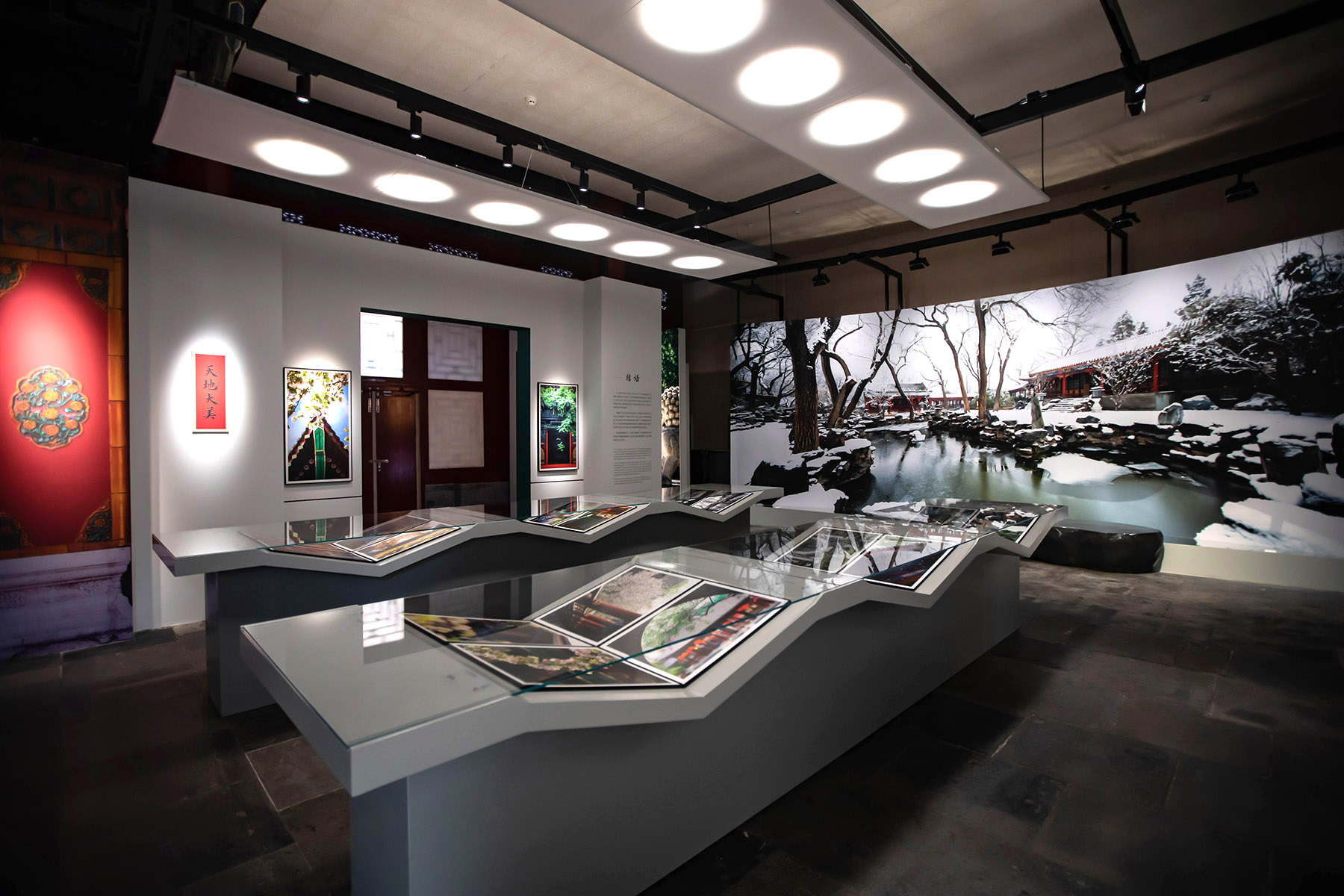
Stepping into the Jiale Hall of the Prince Kung's Palace Museum, visitors are immediately met by two monumental photographs positioned opposite one another.
On the left, a view of the Forbidden City's central axis unfolds under the crisp golden light of a winter morning. The ancient site's Hall of Supreme Harmony, standing solemnly atop its three-tiered marble terrace, commands a sense of absolute majesty defined by "ritual order".
On the right, Prince Kung's Palace's "Bat Pond" rests under a soft blanket of snow. Meandering paths and sculpted rocks trace a landscape of quiet intimacy and conjure up a vivid scroll of "aesthetics of living".
The symmetrical display of the two photographs serves as the threshold into Flourishing Times, New Beginnings: A Visual Journey from Cultural Heritage to Enriched Life, an exhibition that opened in late November.
READ MORE: An exhibition to always remember
Jointly hosted by the Palace Museum and the Prince Kung's Palace Museum, the exhibition was staged simultaneously in the Palace of Prolonging Happiness at the Forbidden City and the Jiale Hall at the Prince Kung's Palace Museum.
It features over 200 photographs selected from the two institutions' in-house photographers, forming a richly layered visual landscape that goes beyond mere documentation into interpretation and storytelling.
"This is the visual core of the exhibition — the starting point of the concept of 'gazing at each other'," explains Guan Xin, the exhibition's curator and a photographer with the Prince Kung's Palace Museum.
"The strength of the Forbidden City image lies in its extraordinary geometry and centrality — a top-down declaration of order. In contrast, Prince Kung's Palace embodies subtlety, concealment and revelation, and the experience of 'strolling within' that the viewer can imagine," Guan adds.
This juxtaposition creates a unique visual tension. One site represents the state; the other, the home. One is formal and structured; the other, natural and fluid.
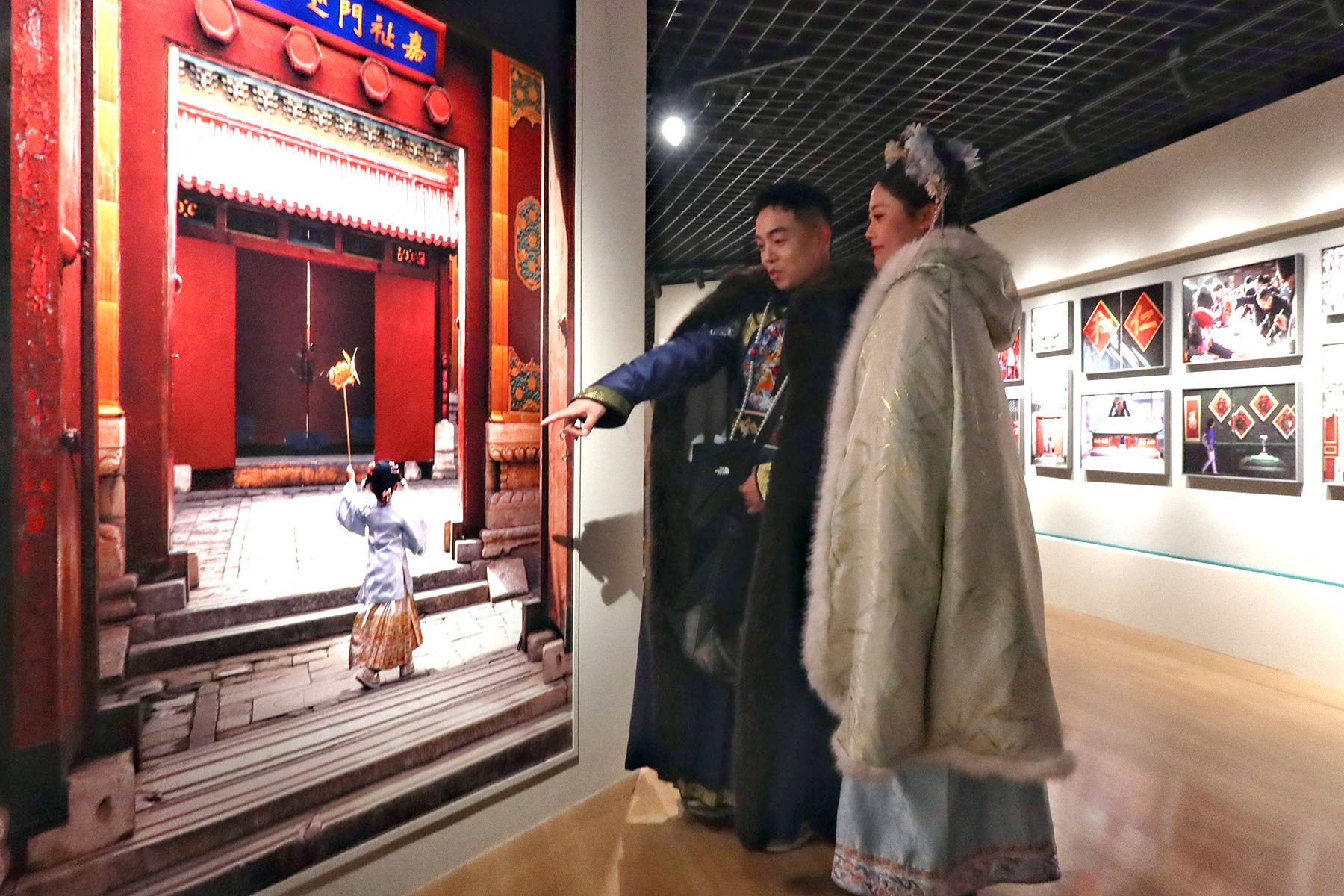
"The deeper meaning of 'gazing at each other' lies in the exchange of perspectives," Guan notes, as she pauses before a photograph featuring a little girl at a gate of the Forbidden City. Dressed in traditional autumn clothing and holding a carp-shaped lantern, the child stands with her back to the viewer, gazing upward at the centuries-old gate towering above her.
"I took this photo," Guan recalls.
"That day at the Palace Museum, I came across this little girl during a photo shoot. Her face is unseen, both to protect her privacy and to leave infinite room for imagination. She represents how people today connect emotionally with these ancient architectural spaces," she explains.
This exchange of perspectives also sparked artistic renewal for the photographers.
Guan gestures toward another image, this one of the Belvedere of Embodying Benevolence, taken by a Palace Museum photographer. Fast-moving clouds sweep overhead, while a break in the heavy sky sends down a beam of unexpected light.
"This composition isn't 'perfect' in a traditional sense — not every eave is fully captured. But we were all impressed by its powerful visual impact from the transcendent play of light and clouds," Guan admits.
"This kind of 'gaze' breaks the creative routine followed by those of us who work at the same site year after year. It's both a challenge and an inspiration," she adds.
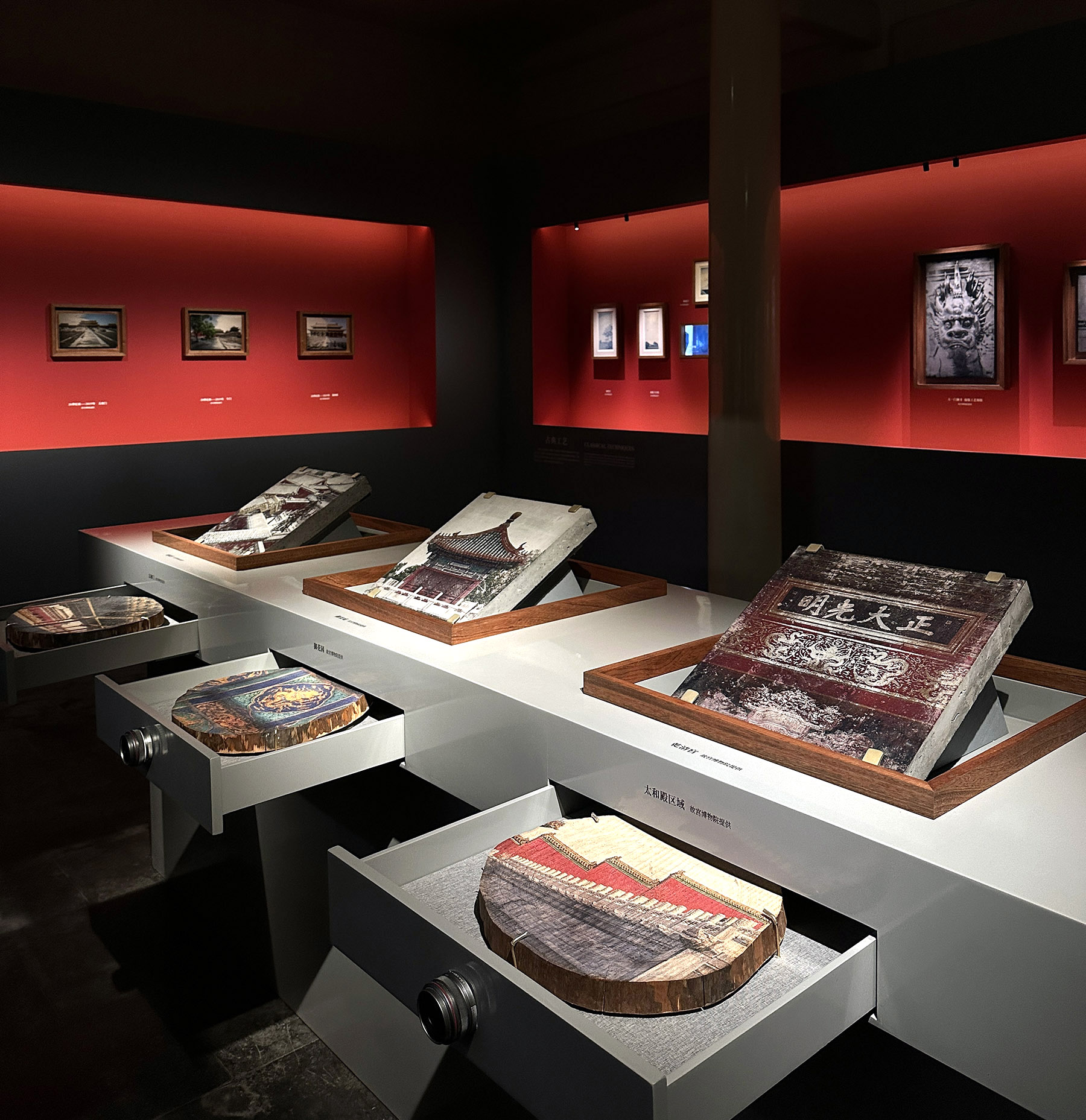
The exhibition then shifts into deeper territory through a chapter titled In the Blink of Time — Archaeology Through Imagery. Here, images are transferred directly onto traditional building materials — the cold, rough texture of fired bricks merges with the carved patterns of Western-style gates, while the reflection of a palace turret shimmers across pinewood grain.
"We wanted a 'tactile visual archive of ancient architecture'," Guan explains beside a set of drawers built into the wall, styled like camera lenses.
Visitors can pull them open to discover images printed on wood. "Innovation in materials turns the photograph itself into an 'archaeological exploration'," she adds.
The process was fraught with challenges. To find bricks dense enough to hold color, the team exhausted countless options.
"We tried applying white paint before printing, but that destroyed the authentic texture of the brick. In the end, we let the color sink directly into the surface, and that very mottled effect is the historical quality we wanted," Guan says.
Nearby, cyanotypes and wet plate collodion prints from the mid-19th century emanate a timeless aura. The deep blue of a palace wall echoes the peeling surfaces of timeworn plaster, creating a correspondence across mediums.
"These classical techniques are complex and unpredictable," Guan reflects.
"That very uncertainty mirrors the transformation and permanence of heritage sites over time. Here, the image is not only a record but also a witness to the process of change itself," she notes.
The final chapter, Humanity and Heritage — Ancient Grace Renewed, highlights contemporary life — people's activities, emotions, and memories — in historical spaces.
The aim was to document public participation, so people are not just bystanders to history but coauthors of cultural heritage's contemporary value.
A "cabinet of curiosities" inspired by the crabapple flower-shaped window lattices of the Prince Kung's Palace Museum draws viewers to peer through its patterned openings.
Inside, photographs capture the vivid moments of students resting on palace steps, children playing in the garden, and a cat darting into a frame.
"We wanted to create an engaging discovery," Guan says.
"While viewing the images from different angles, the visitors themselves become part of the living exhibition. This act of seeing and being seen is itself a form of public engagement with cultural heritage."
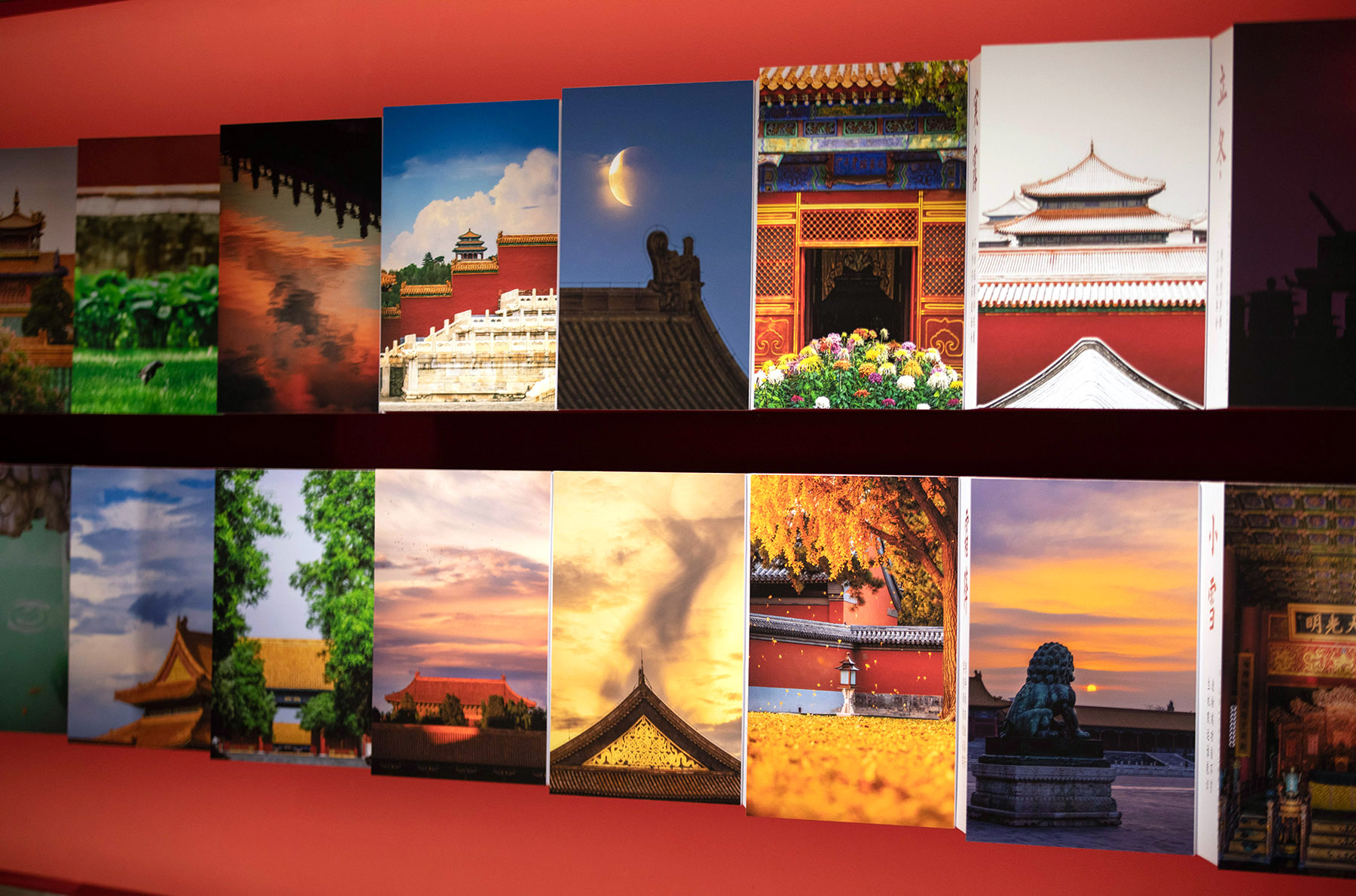
On the walls, scenes from the Prince Kung's Palace Museum's intangible cultural heritage performances, poetry gatherings under flowering crabapple trees, and traditional New Year picture workshops unfold alongside the Forbidden City's stunning imagery during the 24 solar terms.
Photographer Zhu Kai from the Palace Museum says it was "a refreshing experience" photographing Prince Kung's Palace for the first time.
"While the two sites share certain visual principles, Prince Kung's Palace, with its green-toned palette and vibrant natural scenery, offered me new creative inspirations," Zhu says.
He says he tried to interpret the palace's beauty in a visual language that resonates with the public, connecting them emotionally to both the palace and its past.
ALSO READ: At home with the Kong family
Zheng Wenyue, also a photographer with the Palace Museum, speaks of bringing her Forbidden City practice to take photos of Prince Kung's Palace.
"We often frame architecture in conversation with nature — ancient trees and flowering plants alongside halls and gates. Millennia-old trees stand witness to the passage of time, and this interaction between architecture and ecology became a theme we also explored at Prince Kung's Palace," she explains.
She appreciates the innovative approach of presenting images on brick and wood.
The coarse, tactile texture of these materials adds a dimension of "carved time", evoking a conversation between the photograph and the substance of cultural heritage.
"In this way, the old is revitalized. We are thrilled with how the exhibition has come together, exceeding our expectations," Zheng says.
Contact the writer at yangfeiyue@chinadaily.com.cn
