

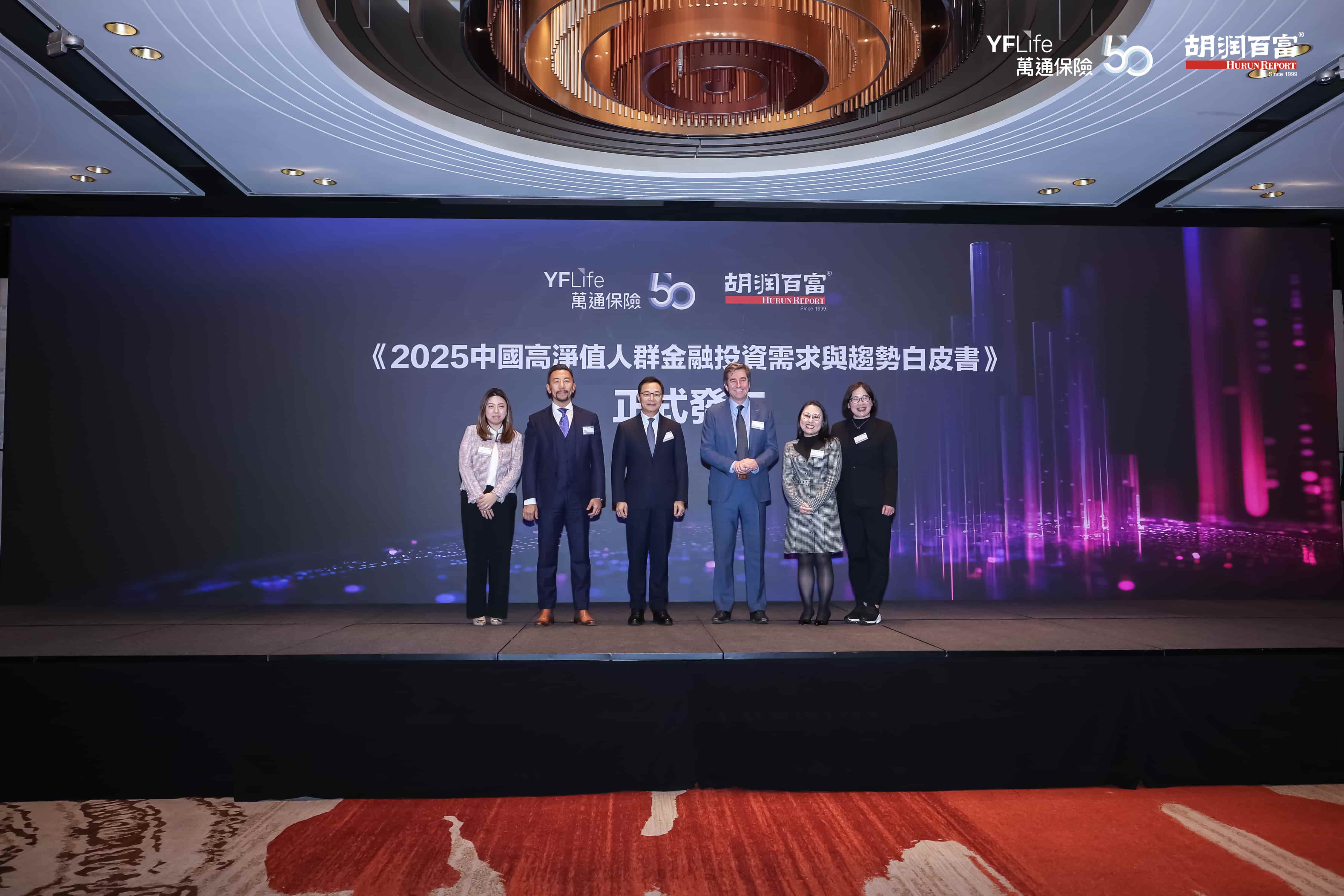
China’s high-net-worth individuals (HNWI) plan to raise their exposure to insurance, gold and equities over the coming 12 months to better balance stability and growth, with the Hong Kong Special Administrative Region acting as the springboard for global diversification, according to a report released on Thursday.
The report, “Mapping the Investment Landscape for China HNWI 2025”, published by insurer YF Life and the Hurun Research Institute, shows China’s deep-pocketed investors are building stable, diversified financial portfolios. On average, they hold five or six different financial products, forming what the report calls a “pyramid” structure anchored by bank deposits, insurance and stocks.
READ MORE: Declining HIBOR set to prop up HK economy in 2026
Over the next year, nearly 50 percent plan to boost allocations to insurance, 42 percent to gold and 34 percent to equities — a mix demonstrating their priorities of asset safety, risk hedging, and sustained long-term gains. Meanwhile, they are trimming low-yield holdings such as bank savings and money‑market funds.
Offshore assets now make up about one-fifth of their total wealth. Over the past three years, around 45 percent of those surveyed have invested in financial products outside the Chinese mainland, with offshore insurance, bank savings and equities topping the list.
READ MORE: Hong Kong’s IPO market to reach HK$320b in 2026, accounting firm says
Hong Kong remains the favorite investment destination, attracting 52 percent of offshore allocations, followed by Singapore at 40 percent, a trend the white paper attributes to their well-developed financial markets, diverse product offerings, and tax advantages.
Rupert Hoogewerf, chairman and chief researcher of Hurun, said China’s wealthy are “weathervanes” for broader market sentiment. Their investment strategies during uncertain times are worth watching closely, he added.
Zhang Xifan, executive director and CEO of YF Life, said global economic uncertainties are forcing wealthy families to rethink their priorities. They are shifting from asset expansion to risk control, from short-term trading to long-term positioning, and from wealth accumulation to legacy planning.
READ MORE: Experts: Synergy between mainland, Hong Kong accelerates startup growth
The study surveyed 500 high-net-worth individuals with an average age of 44 and average family net assets of 37 million yuan ($5.24 million), more than half of whom are business owners.
According to the report, insurance is increasingly becoming the bedrock of their portfolios. Wealthy families spend an average of 590,000 yuan a year on premiums, and 56 percent plan to build insurance-centered portfolios with a growing emphasis on wealth planning and inheritance.
It also shows that besides continued spending on children’s education, financial investments and insurance, health care has emerged as a new priority in the year ahead. Areas where they plan to cut spending include luxury goods, social gifting, and leisure, indicating a move away from non-essential consumption.
Contact the writer at irisli@chinadailyhk.com
