

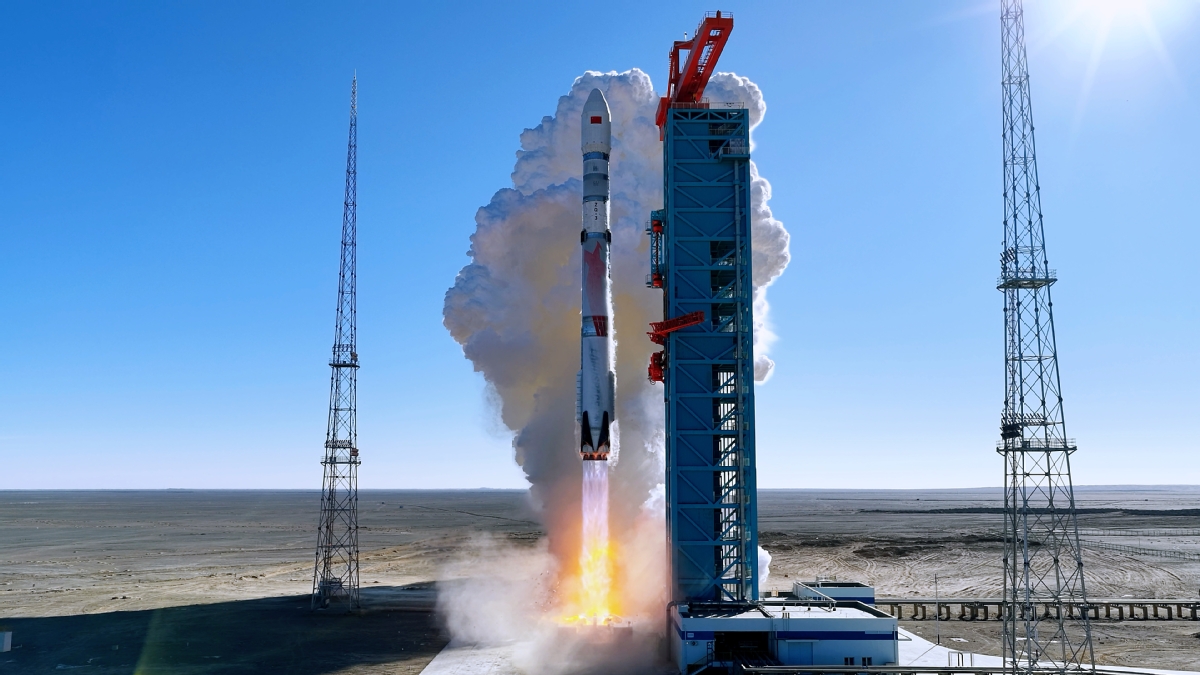
LandSpace, a leading private space company in China, conducted the debut flight of its ZQ 3, or Rosefinch 3, carrier rocket on Wednesday, though the attempt to recover the first-stage booster failed.
The ZQ 3 Y1, a gigantic craft primarily made of stainless steel, blasted off at noon from its dedicated launch service tower at the Jiuquan Satellite Launch Center in the Inner Mongolia autonomous region. The Y1 designation signifies that the craft is the first in the ZQ 3 series. The mission represents China's first attempt to launch a reusable rocket into orbit.
After a short flight, the rocket's second-stage booster reached its preset orbital position, while the first-stage booster re-entered the atmosphere and exploded into a fireball over a designated recovery site in Minqin county in Gansu province, which is about 390 kilometers away from the launch site.
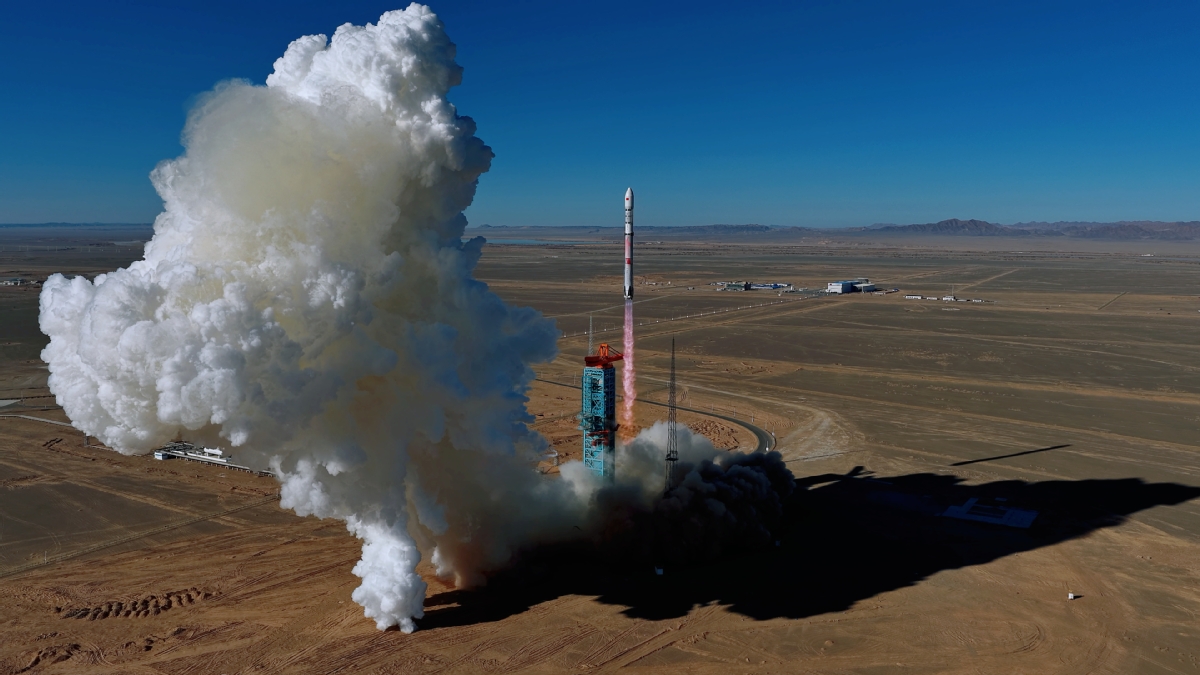
According to the Beijing-based rocket maker, the ZQ 3 Y1 stands 66.1 meters tall and 4.5 meters wide, weighing nearly 570 metric tons when fully fueled. With a liftoff thrust of over 750 tons, it has the capability of transporting heavy satellites to low-Earth or sun-synchronous orbits.
The rocket was powered by LandSpace's methane engines — the first stage had nine TQ-12A engines, creating the major lift for the rocket, while the second stage had a TQ-15A engine. Compared to traditional rocket engines that can function only once, a methane engine is reusable and more environmentally friendly.
READ MORE: China's commercial reusable test rocket completes takeoff, landing test
The rocket's propellant tanks are constructed of stainless steel, which features good strength, resistance to high temperatures and corrosion, and are cost-effective. There were four grid fins and four landing legs on the space vessel that would have been used to enable the first-stage booster to make a soft landing.
