

Hangzhou Asiad sets new benchmark in fostering diversity and inclusivity, draws record participants
 (SONG CHEN / CHINA DAILY)
The 19th Asian Games, staged in Hangzhou, capital of Zhejiang province, attracted worldwide attention.
Despite being postponed for a year due to the COVID-19 pandemic, organizers said the sporting extravaganza returned in style, with the opening ceremony and related coverage attracting a total of 503 million views.
Some 12,500 athletes from the 45 national and regional Olympic committees in Asia registered for the Hangzhou Asiad. A record 481 gold medals in 40 sports were up for grabs, making it the biggest edition of the Games to date.
Featuring Olympic and non-Olympic sports, the Asian Games is often described as the world’s second-largest multi-sport event after the Olympic Games, but the number of athletes taking part in Hangzhou surpassed the 11,309 competitors for the Tokyo Olympics, which were scheduled to take place in 2020, but were also postponed for a year due to the pandemic.
The Hangzhou Games coincided with the 110th anniversary of the Asian Games, making it an event of particular significance.
Raja Randhir Singh, acting president of the Olympic Council of Asia, or OCA, who comes from India, said the ever-evolving Asian Games underlines the growing influence of Asia on the global sporting stage.
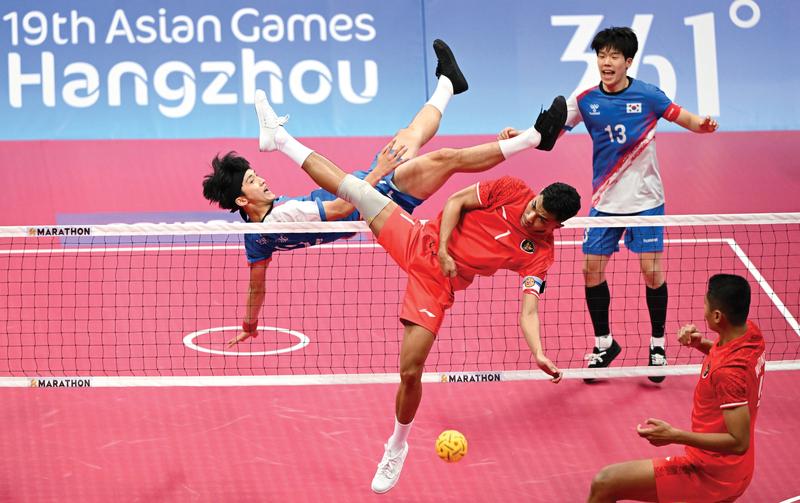 South Korean and Indonesian teams compete in sepak takraw at the Asian Games in Hangzhou. (PHOTO / XINHUA)
Singh, a five-time Olympian shooter who won gold in men’s trap at the 1978 Asian Games in Bangkok, said during an anniversary celebration gala on the sidelines of the Hangzhou Games: “The OCA prides itself on its diversity of culture throughout the continent. There is much more to the Asian Games and to the OCA than elite sports competition.”
The Asian Games, held every four years for athletes from across the continent, is arguably the continent’s first multi-sports event, first staged in 1913 in Manila, Philippines, and initially known as the Oriental Games, before being renamed the Far Eastern Championship Games, or FEC.
After 10 editions of the FEC held through 1934, Asian National Olympic Committees, or NOCs, started discussions at the 1948 Olympic Games in London on creating a unified multi-sports event for all the continent’s NOCs.
These discussions led to the first Asian Games, staged in New Delhi, the Indian capital, in 1951, and featured athletes from 11 NOCs in 12 sports. Indian IOC member Guru Dutt Sondhi was a key figure in founding the Asiad.
The Asiad was organised by the Asian Games Federation until 1982, when the federation was succeeded by the OCA, which was later recognized by the International Olympic Committee (IOC). Before the Hangzhou Games, only nine nations had hosted the Asian Games since 1951. A total of 46 NOCs have taken part in the Games, including Israel, which competed from 1954 to 1974.
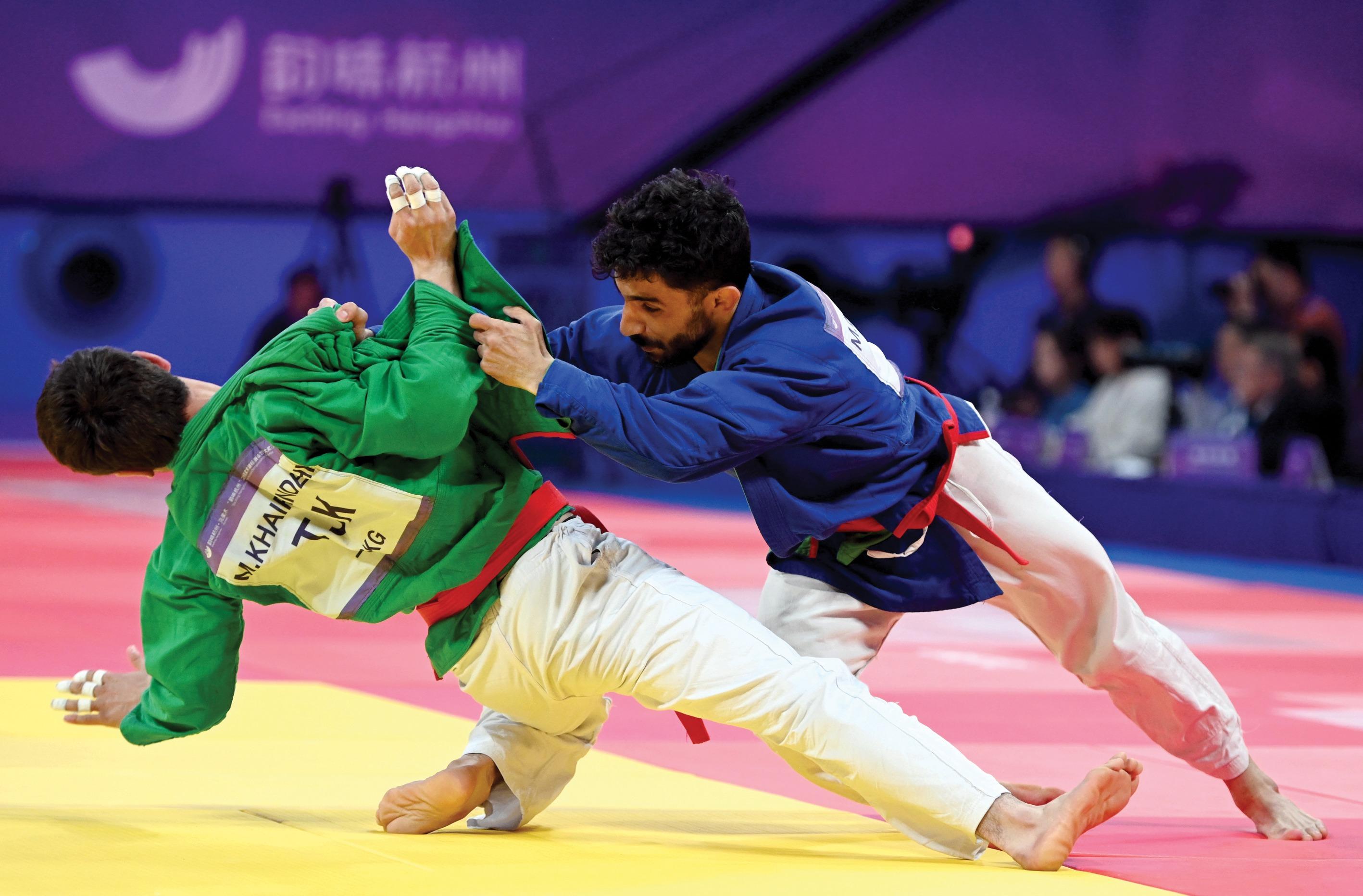 Athletes from Iran (right) and Tajikistan compete in a kurash event at the Asian Games. (DONG XUMING / FOR CHINA DAILY)
In 2018, the Asian Games took place in Jakarta and Palembang, Indonesia, and featured all 45 NOCs that are currently part of OCA.
Although based originally on the format for the Olympic Games, the Asian Games boast regional sports with distinct Asian characteristics, including dragon boat racing, kabaddi (a team contact sport), sepak takraw (kick volleyball) and kurash (a folk wrestling discipline).
The Hangzhou Games’ 40 sports outnumber those for the Tokyo Olympics in 2021 by six, and offered 142 more gold medals compared to the Tokyo event.
The rising number of medal events and ever-growing scale of the Asian Games have even triggered controversy among some sports figures.
Wei Jizhong, OCA honorary life vice-president, said the late Juan Antonio Samaranch, former IOC president, once criticized him for introducing too many sports for the 1990 Asian Games in Beijing.
“I told Samaranch that we wanted all Asian athletes to have the chance to get together, but not just for competition. The result is important, but it isn’t everything,” Wei said.
Such tradition has been a feature of the Asian Games for decades.
At the 1974 Games in Teheran, Iran, fencing, gymnastics and women’s basketball made their debuts. Four years later, in Bangkok, archery and bowling were contested at the Games for the first time.
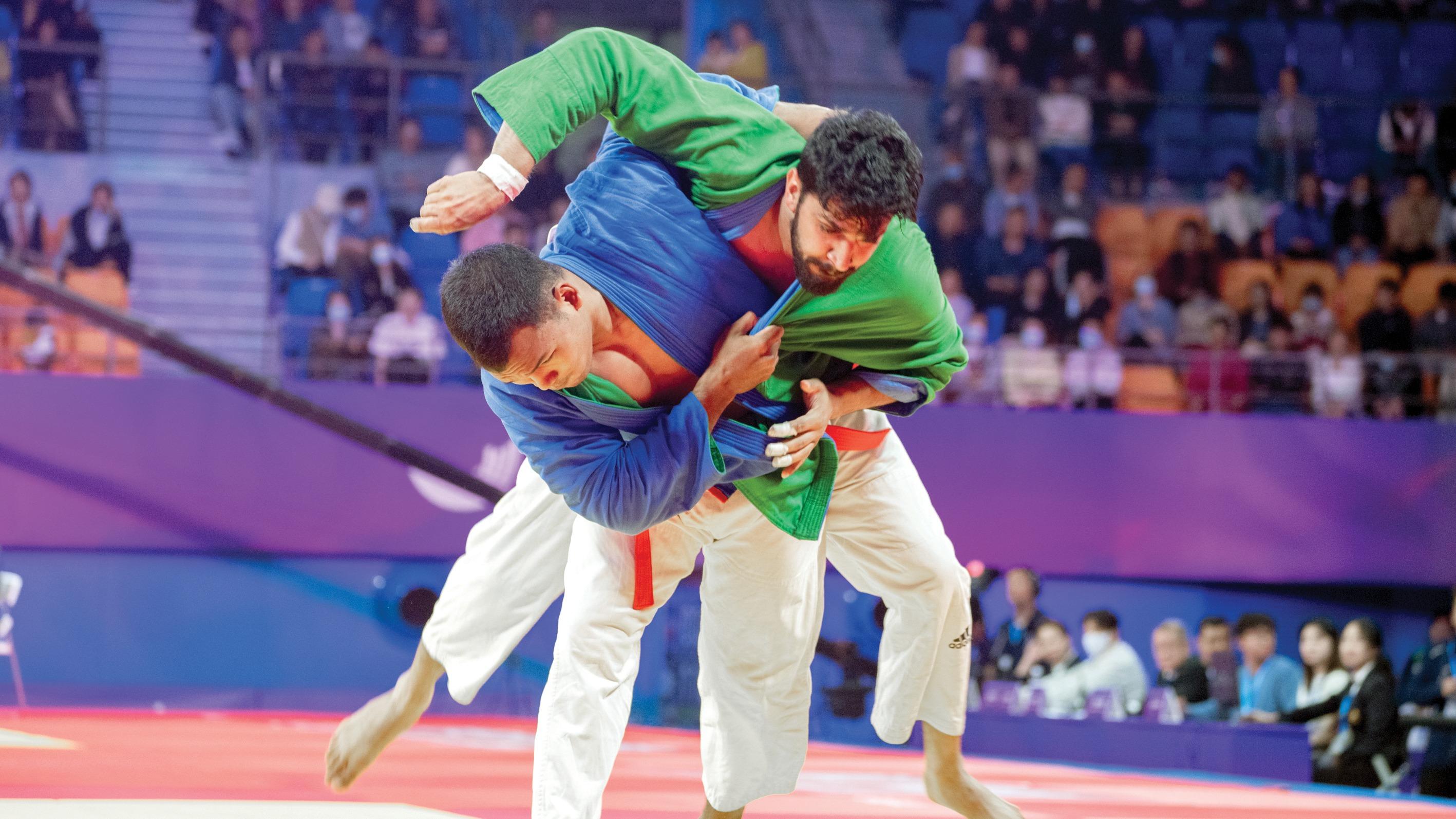 An international Kurash event is held in Hangzhou, Zhejiang province. (FANG JIANFEI / FOR CHINA DAILY)
In Beijing in 1990, more than 6,000 athletes from 37 NOCs took part in the Games, as softball, sepak takraw, wushu, kabbadi and canoeing made their first appearances at an Asiad.
Wei, who headed the International Volleyball Federation from 2008 to 2012, said: “We are open to everyone. The Asian Games are not only for elite sportspeople.
“We found a way to add sports, especially regional ones, to give more athletes the chance of winning a medal. More than 80 percent of Asian NOCs boast medal winners.
“When athletes from developing countries win medals, their people are happy, their government is happy, and sport is supported. Sport has a high social position, so I think this policy of the OCA has been successful.”
Singh, the acting OCA president, said, “The Asian Games is also a time to embrace our culture, our heritage, and to promote everything great about our continent.”
He said it is important for the Games to attract young people with the addition of new, action-packed events that appeal to this audience, such as breaking (break dancing) and esports, which are included in the Hangzhou Games.
“For young people, the Asian Games showcase the Olympic values of teamwork, dedication, respect and friendship. They let people unite to feel the value and thrill of competition and cooperation.”
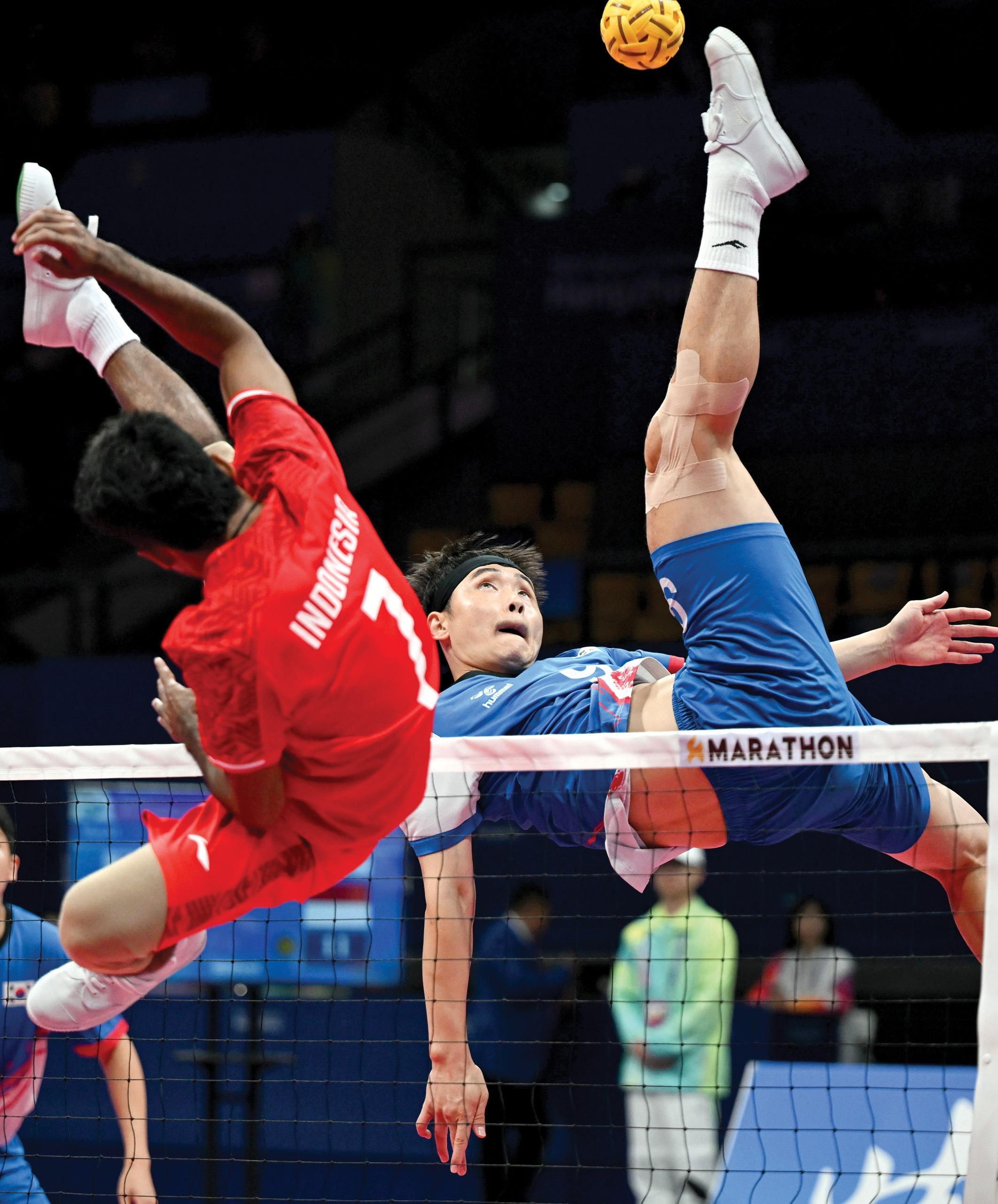 South Korean and Indonesian teams compete in a sepak takraw event during the Asian Games in Hangzhou. (PHOTO / XINHUA)
Zhou Jinqiang, a vice-minister of the General Administration of Sport of China, said: “The addition of new sports such as breaking and esports is welcomed by the younger generation. The sports at the Asian Games have strong Olympic elements, and are a great opportunity for Asian countries and regions to display their cultures and traditions. The variety of sports at the Games is the best testimony to the inclusiveness and diversity of Asian sports culture.”
Asia’s regional sports are always a major attraction at the Games.
For example, kabaddi, one of the oldest sports in the world, with a 4,000-year history, was included in the main program at Hangzhou. A fast, furious and physical sport, kabaddi competitions are always great spectacles.
Another good example is sepak takraw. The sport, which has a vibrant history, is immensely popular in Southeast Asia. In 1990, sepak takraw was included for the Asian Games in Beijing. Since then, it has grown not only as a sport, but also in commercial and entertainment value.
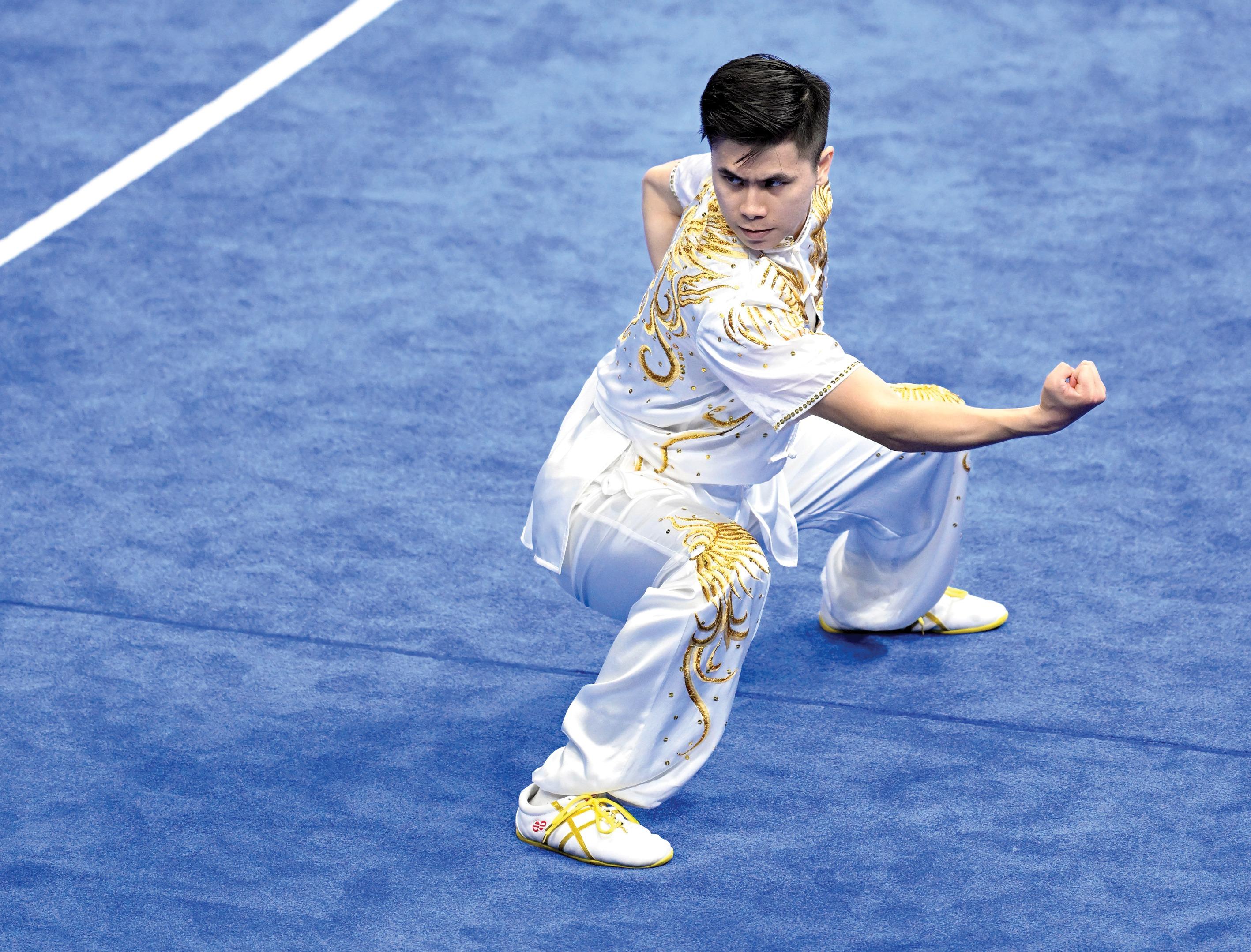 An Indonesian athlete competes in a Wushu event during the Asian Games. (PHOTO / XINHUA)
Abdul Halim Bin Kader, president of the Asian SepakTakraw Federation, said: “This sport is very fashionable. Thanks to its development and promotion in recent years, a variety of regional competitions have emerged in Asia and across the world. The Asian Games in Hangzhou mark a milestone for sepak takraw.”
The inclusion of breaking and esports attracted huge attention and generated a buzz among young people at the Games. Esports was included for the first time as a demonstration sport at the 2018 Asian Games in Indonesia, with China winning two gold medals and one silver.
This year in Hangzhou, it debuted as an official medal sport, featuring seven competitions — Arena of Valor Asian Games Version, Dota 2, Dream Three Kingdoms 2, League of Legends, PUBG Mobile Asian Games Version, Street Fighter V, and EA Sports’ FIFA-branded football game. On Sept 27, China won the first gold medal in the sport by beating Malaysia in the final of Arena of Valor Asian Games Version.
Breaking was included for the 19th Asian Games program at a meeting of the OCA General Assembly in Muscat, capital of Oman, in December 2020. This followed a successful appearance of breaking at the Youth Olympic Games in Buenos Aires, Argentina, in 2018, and its subsequent inclusion in the program for the 2024 Olympic Games in Paris.
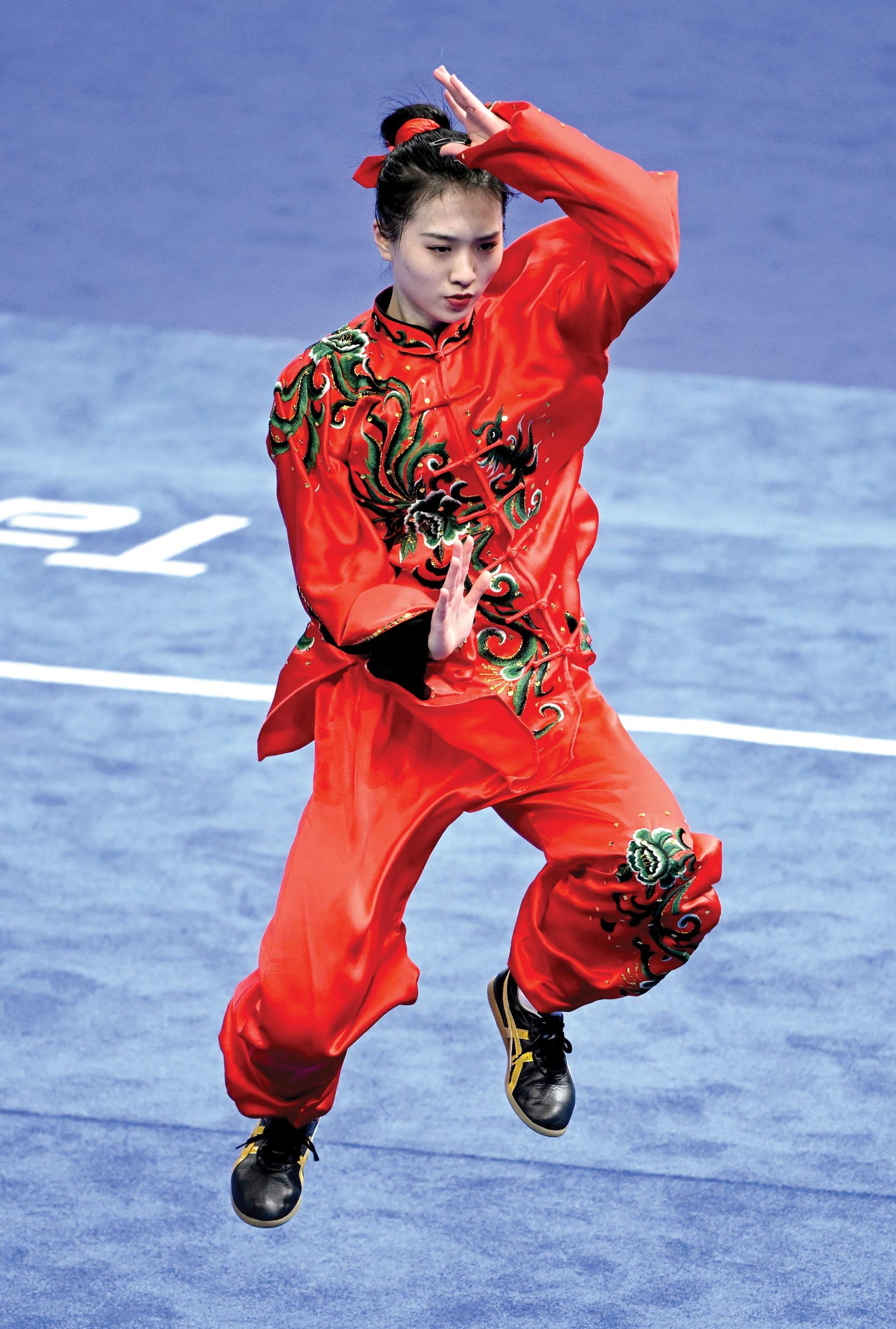 Chinese athlete Tong Xin competes in a Wushu event during the Asian Games. (PHOTO / XINHUA)
Yang Meng, a Hangzhou Asian Games Organizing Committee official, said: “Breaking was added to the Games, as it is popular among young people. Through breaking, we hope more people, especially the younger generation, will be attracted to the Asian Games and to sports.”
Singh believes the successful Asian Games in Hangzhou will further promote the continent’s ability to host major multinational sporting events.
“We are the only continent — and we should be proud of this — that has been ready to host any Games at any time, back to back,” Singh said, referring to the Pyeongchang Winter Olympics in the Republic of Korea in 2018, the delayed Tokyo Summer Olympics in 2021, and the Winter Olympics in Beijing last year.
“In 2029, the Winter Asian Games will be staged in Saudi Arabia, something you would once never have imagined,” Singh added.
“We had one of the finest World Cups (soccer) in Qatar last year. The World Beach Games were supposed to be staged in another part of the world, but with just six months’ notice, Qatar hosted them. In addition, Beijing has hosted the Summer Olympics and the Winter Olympics.
“Where does all this happen? It happens here in Asia.”
